
New Mullineux ROUNDSTONE Wines at The Wine Studio | Leeu Estates
Two Spectacular New Wines Now Available at The Wine Studio
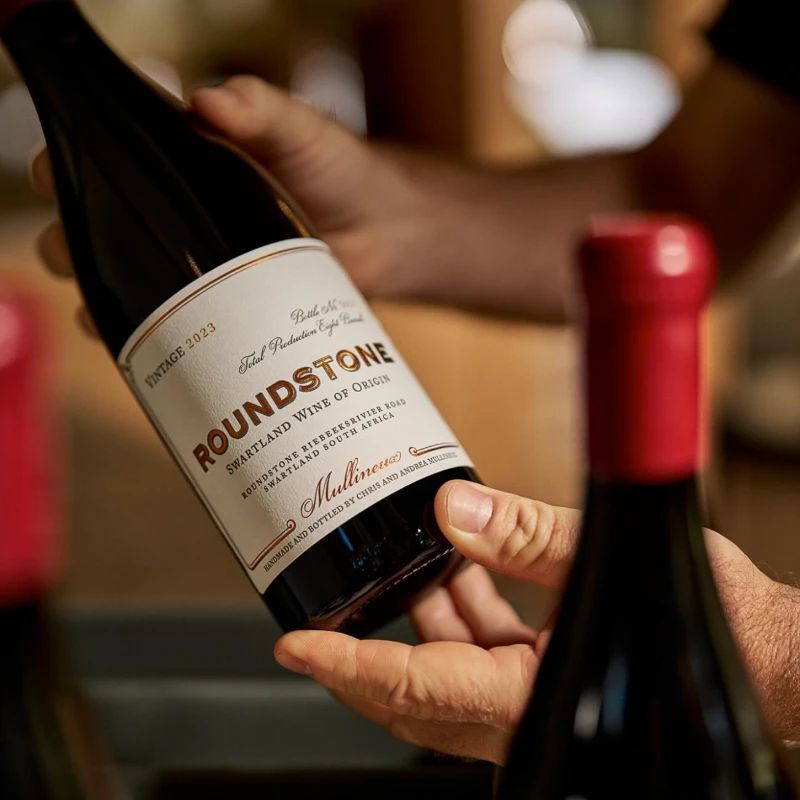
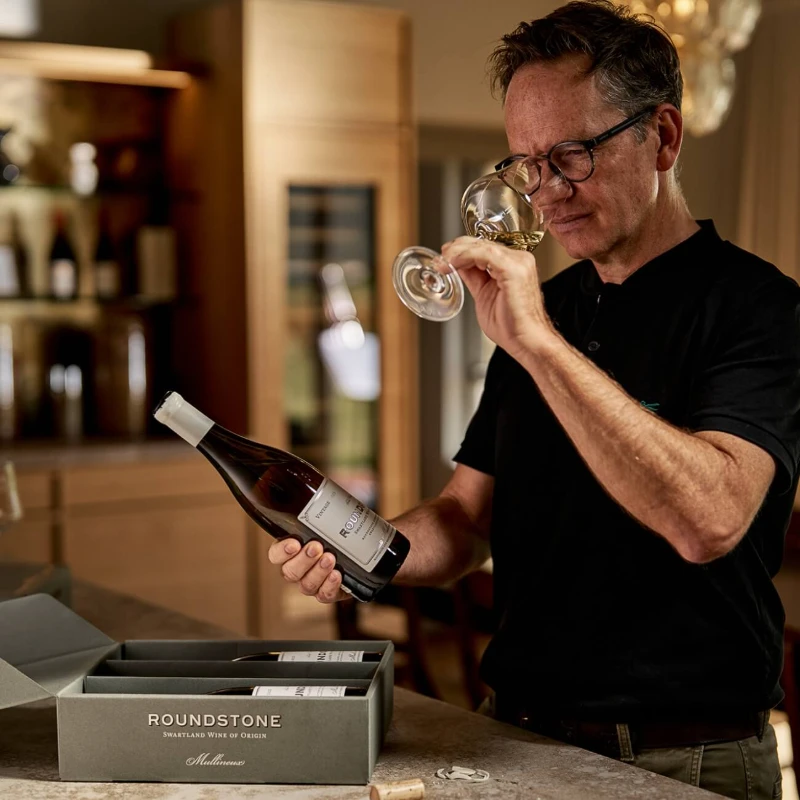
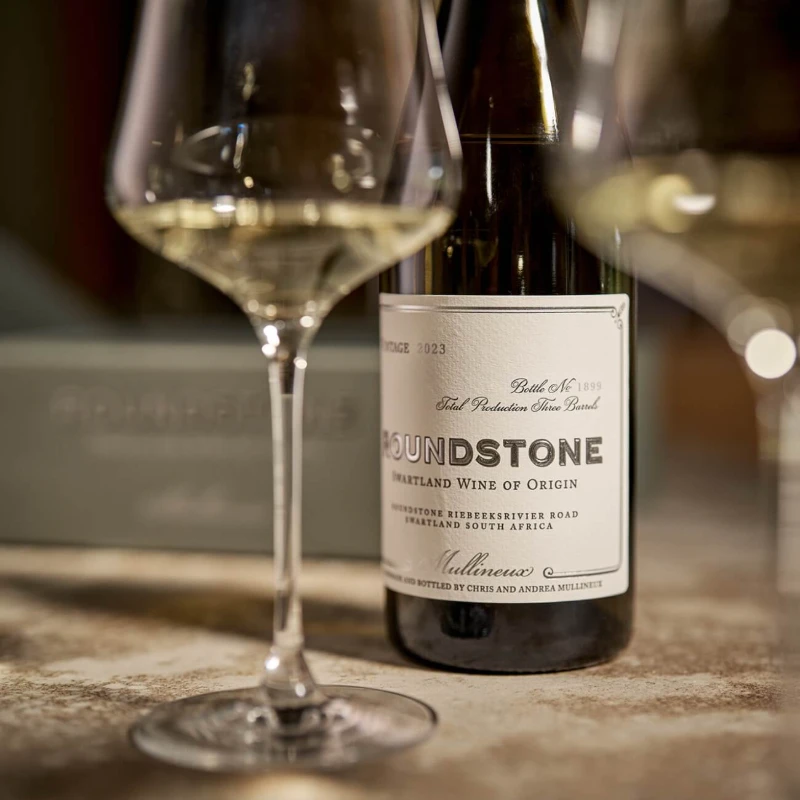
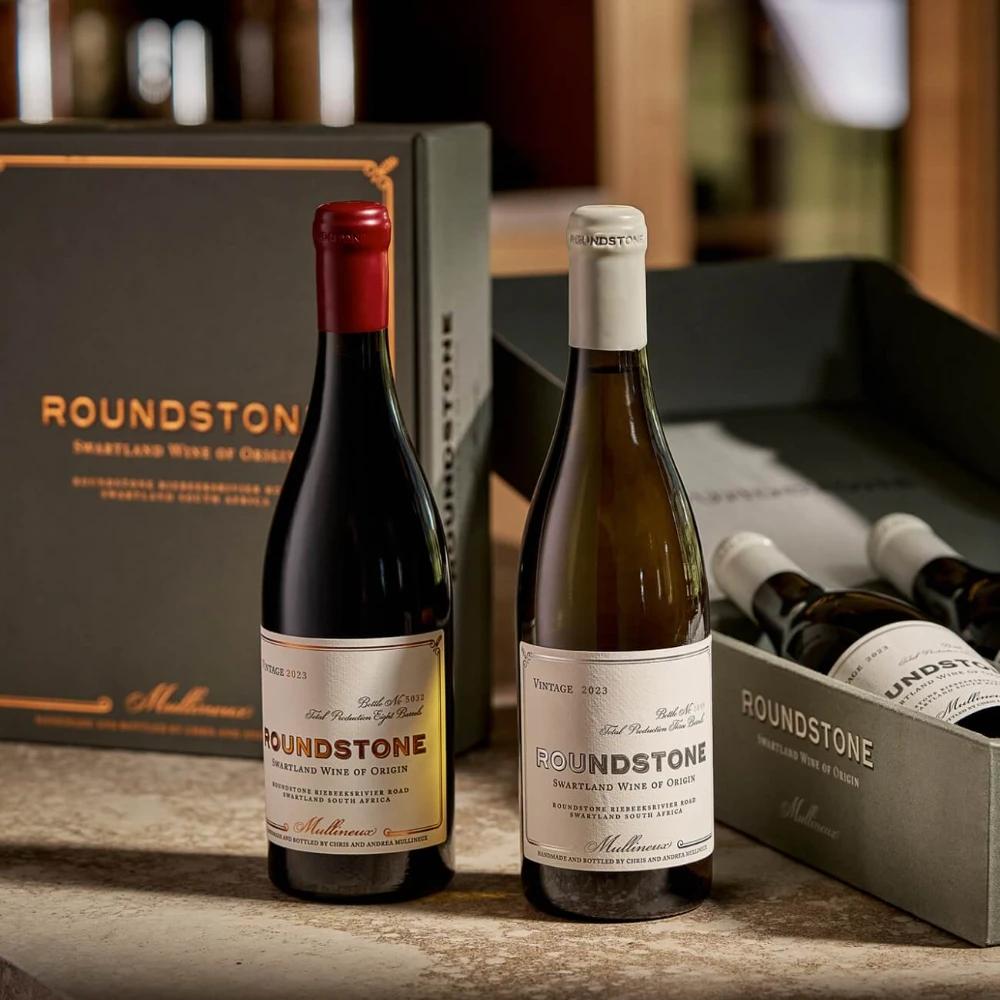
From the schist and quartz slopes of the Kasteelberg Mountain in the Swartland comes something truly special — the debut of the 2023 Mullineux ROUNDSTONE wines, now available to taste and purchase at The Wine Studio on Leeu Estates.
Crafted with precision, patience, and profound respect for the land, these new cuvées capture the essence of Roundstone Estate, now proudly regeneratively organic certified.
We catch up with Mullineux Co-Founder and -Winemaker Chris Mullineux on the exciting new releases…
Mullineux is known for crafting site-specific, terroir-driven wines that express the soul of the Swartland. What inspired you to create the ROUNDSTONE wines as distinct cuvées within your collection?
We've always believed that the Swartland's magic lies in its raw, unfiltered expression of place. The ancient soils and dry, sunny climate force vines to dig deep and reveal their truth. Roundstone, our home estate on the south-facing schist slopes of Kasteelberg, has been the heartbeat of Mullineux. But it wasn't until now, with the 2023 vintage, that we felt the South African heritage and Mediterranean varieties that we planted there over a decade ago - shaped by years of regenerative farming - had truly come into their own. These wines are distinct cuvées because they stand alone as pure voices of our estate on this mountain. No blending across regions; just the schist bedrock, the quartz veins, the fynbos corridors, and our hands in the soil. It's our way of honouring the farm's evolution and embracing the future.
The Swartland region has become synonymous with authenticity, sustainability, and individuality. How do you see Roundstone Estate contributing to this broader Swartland identity?
Roundstone embodies the Swartland's pioneering spirit, which is wild, unpretentious, and fiercely committed to the land's story over flashy trends. By achieving organic certification and converting to full regenerative organic certification, we're not just farming; we're restoring. Our practices include planting diverse cover crops that feed the soil microbiome; biodiversity corridors teeming with fynbos and pollinators; and zero synthetic inputs. These amplify the region's reputation for thoughtful, site-driven wines that speak of where they come from with purity and finesse. Through this we are proud to add another voice to the Swartland chorus.
Roundstone is described as a “definition of place, precision, and principle.” How would you describe the essence of this site on the schist and quartz slopes of the Kasteelberg Mountain?
To us, Roundstone is alive. The estate is a rugged, south-facing amphitheatre where rocky, 500-million-year-old Malmesbury schist-based soils force the vines’ roots to dig deep for every drop of water and nutrient. Precision is in the contoured vineyard rows, which we planted along the earth’s natural slopes and have hand-tended over years, treating each vine with care as it integrates into the site. Principle is our intent to regenerative harmony: no tilling to preserve soil structure; Nguni cattle grazing to cycle nutrients; and wild fynbos corridors that hum with life. The essence of Roundstone is restrained power. The site yields wines of texture, balanced by crystalline clarity, perfume and vibrancy.
The estate has achieved full regenerative organic certification in 2025. How has this transition shaped the wines and deepened your connection to the land?
Our Regenerative Organic Certification (ROC) in 2025 validates the intuitive shifts we've made at Roundstone over the past two decades since we started working with the vineyards on the estate. We've fully embraced a host of farming practices aimed at ultimately improving our wines. Amongst others, this includes compost that we make on the estate to feed our soils and vines; diverse cover crops including cereals for carbon, lupins for nitrogen, and root vegetables to break up and aerate the soil; planting our vines along the natural contours of the land to prevent erosion and aid water penetration into our soils; and planting fynbos corridors inside our vineyards to invite biodiversity into the vineyards. From all this, the wines have gained an electric vitality: brighter acids from healthier soils, deeper fruit from vines that grow in a balanced manner, and fine-grained, silky tannins. Farming this way means we must spend more time in our vineyards, and it's definitely made us better listeners to the schist's secrets.
Could you speak about the biodiversity corridors of wild fynbos and how they influence both the ecosystem and the wines’ unique profiles?
The fynbos corridors - which are strips of over 250 plant species that we planted inside the vineyard - include untamed proteas, ericas, and restios weaving between the vines. These corridors are Roundstone's connection to the Swartland as they lead through the vineyard rows and connect to the fynbos growing on Kasteelberg Mountain. Ecologically, they create sanctuaries for pollinators, insect predators (ladybirds, wasps and birds), and the plants themselves sequester carbon while preventing erosion on our schist slopes. As a bonus, these indigenous flora infuse subtle aromatic complexity to our wines through the essential oils that many of the species give off. From our point of view, biodiversity is an important part of the terroir's voice.
The 2023 vintage marks an exciting milestone for Roundstone Estate. How does this release reflect the evolution of your winemaking philosophy over the past two decades?
Our winemaking philosophy has always been to bottle wines that we feel are a true expression of the dry, sunny climate, old vines and ancient soils of the Swartland in a balanced way. The philosophy is the same today, and though we have not radically changed anything since our first vintage, each year we have fine-tuned small things that we believe allow our wines to better express the Swartland with finesse. Though our wines are made in much the same way in the cellar today as they were two decades ago, we believe the constant small improvements in the cellar and the hard work we and our team have done to move to regenerative organic farming in our vineyards make our wines that bit better each year.
The 2023 ROUNDSTONE blends Syrah, Grenache Noir, and Cinsault, classic Swartland varieties. What role does each grape play in expressing the Roundstone terroir?
On the nose, Cinsault brings lifted floral perfume and this combines beautifully with the dark fruit and bergamot notes from Syrah planted on schist. Grenache brings firm yet fine-grained tannins on the palate and this is balanced by Syrah’s silky texture and the bright red, fruited freshness of Cinsault, all of which will allow this wine to age phenomenally.
This wine was vinified using 100% whole-bunch fermentation and matured for nearly two years. What does this method bring to the wine’s aromatic and textural complexity?
We believe that whole-bunch fermentation truly connects a red wine to the terroir. The grapes are attached to the stems, which are part of the vine, and the vine is planted in the soil. We are careful to ensure that all the berries are crushed so there is no carbonic maceration, as we feel this can dominate a sense of place. Intact stems capture a cool freshness and build layers of aromatics. The patience of maturing the wine for years in neutral oak and concrete yields silky tannins and results in a wine that’s aromatically alive, texturally profound, and expresses Roundstone's restrained power.
You’ve described this vintage as having “vibrant quartz- and schist-derived tannins.” How do those mineral elements manifest on the palate?
Those tannins are Roundstone's signature. On the palate, they are firm yet silky, almost like fine river stones smoothed by eons. Quartz brings a crystalline crunch, an electric, mouthwatering persistence that lifts the dark fruit, leaving a salty-mineral echo on the finish. Schist adds a depth and texture that grounds the palate. Together, they frame the wine's core of black cherry and violet with tension and grace, a tactile reminder of the mountain's geology.
How would you recommend wine lovers enjoy this wine both now and after a decade of cellaring? Do you have a recommended food pairing?
The wine is stunning now, but will age beautifully. Decant it young—let it breathe for a few hours to allow the floral and fruit to open. After a decade we expect it to transform and express more of the silky mid palate and tertiary aromatics of tomato leaf, truffle, and iron. Pair with aromatic meats like aged lamb shoulder or wild game, or umami aromatics of mushroom-based dishes.
The 2023 ROUNDSTONE Blanc is an intricate blend of Macabeu, Chenin Blanc, Grenache Blanc, Clairette Blanche, Roussanne, Verdelho, Vermentino, and Assyrtiko - an unconventional mix. What inspired this Mediterranean-meets-South-African composition?
Our white vineyards are planted with a selection of Mediterranean and South African heritage varieties, each chosen specifically for their ability to retain freshness and balance under the Swartland’s climate, which is defined by warmth and clarity of light in the growing season. For over two decades, these varieties have proven themselves, yielding wines of precision, texture, and restrained power. Each variety has subtle differences, though, and this brings complexity and balance to the Roundstone Blanc. Chenin anchors with its peach-honey spine, our Swartland soul. Macabeu and Roussanne bring almondy texture, Grenache Blanc and Clairette bring freshness and herbal lift, Verdelho and Vermentino both bring a vibrant, perfumed citrus zing, and Assyrtiko adds a saline snap.
You’ve mentioned that the Blanc is a wine of “precision and restrained intensity.” What were some of the defining factors in the 2023 growing season that shaped this vintage’s energy and texture?
2023 was defined by a wet winter and a cool, dry spring in the Swartland, yielding small, concentrated berries. The summer was warm without extremes, letting phenolic ripeness align with bright acids. Harvest in the early mornings captured that tension and no serious heat spikes allow pure, coiled intensity to release in the glass.
How does the schist and quartz-rich soil influence the structure and freshness of this white wine?
The fractured layers of Schist force the vines’ roots deep, yielding wines with structure and grip and slices through the blend's richness. Quartz veins add a saline, citrus spark that prevents any heaviness despite the powerful site. The result is a white with backbone and poise. The soil’s gift is a fine tension between earth and sky.
The ageing potential of at least 20 years is remarkable. How do you envision this wine evolving over time?
In youth, the wine has vibrant citrus and stone fruit, and is tightly wound on the palate. Give it five to eight years, and some ginger and honeyed notes will start to emerge. From a decade on, it'll be profound: petrol-mineral depth from Assyrtiko, oxidative elegance from Roussanne, layered over Chenin's quince core—complex and contemplative, with endless finish.
Do you have a favourite food pairing for this wine?
One of the secrets of Swartland white wines is that they are super versatile and pair with a wide range of dishes. The aromatic complexity as well as natural texture balanced by freshness mean they pair beautifully with many flavours and foods. We encourage people to experiment for themselves and give us feedback, but in general we would suggest keeping it simple, seasonal and soulful, just like Roundstone.
Mullineux & Leeu Family Wines represents a union of artistry, place, and purpose. How did the partnership between Mullineux and Leeu Collection first take shape?
It began in 2013 as a serendipitous alignment of visions. Andrea (Mullineux) and my Swartland terroir obsession meeting Bas Singh’s passion for South Africa's heritage and his stunning Leeu Estates in Franschhoek. We had built Mullineux on expressing the Swartland with integrity and authenticity. Bas brought an elegant and sophisticated canvas to explore beyond the Swartland, reviving old-vine sites for Leeu Passant and celebrating truly South African fine wine. Today, it's two wineries with one heartbeat.
How has the Leeu Estates setting—particularly The Wine Studio—helped elevate the experience of tasting and understanding Mullineux wines?
Leeu Estates, nestled in the stunning Franschhoek valley, is a world away from Swartland's ruggedness—yet it amplifies our wines' narrative. The calmness of The Wine Studio and our fantastic team of hosts create intimacy and an elevated understanding and appreciation for our wines.
Visitors to The Wine Studio and The Dining Room can now taste the new ROUNDSTONE wines. What do you hope they’ll take away from this experience?
We hope they leave with a connection to our home estate, Roundstone. Amid the serenity of The Wine Studio setting, and hosted by our incredible team, visitors have the opportunity to taste and engage with knowledgeable staff who have all spent time in the vineyards and have a deep appreciation for the farming and the wines. And the pairings at The Dining Room are just superb!